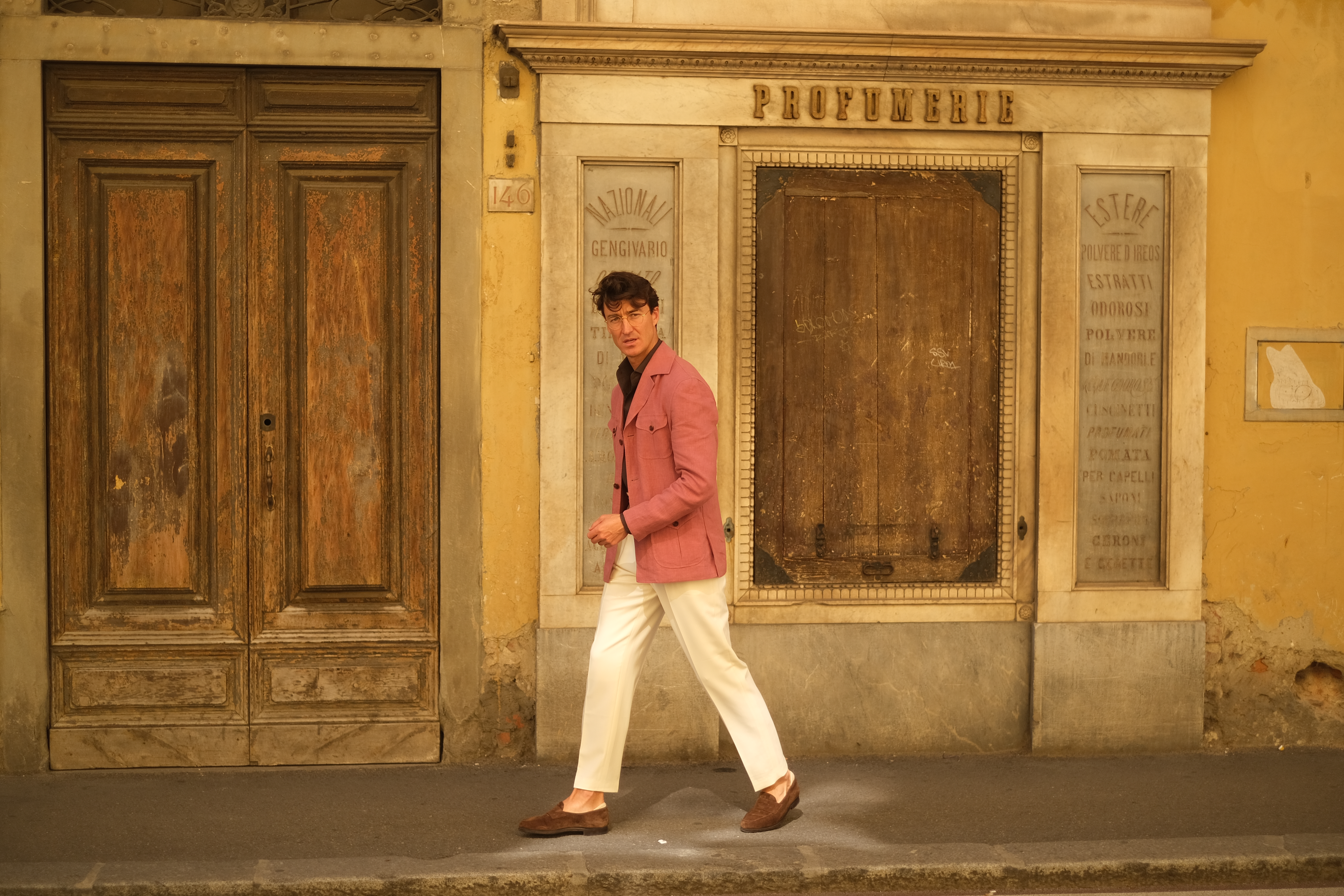
Pitti Uomo comes twice a year, and each time Florence becomes something closer to a living study of how men dress when they know they will be seen. I do not go to be seen. I go because the city, the light, and the company make it one of the more worthwhile weeks of the year — and because it is a good reason to wear something made well.
This edition, I prepared two looks. Both made to my measurements. Both carrying a significant amount of handwork. Each one built around a clear idea of colour, texture, and balance.
Day One: The Ivory Trousers
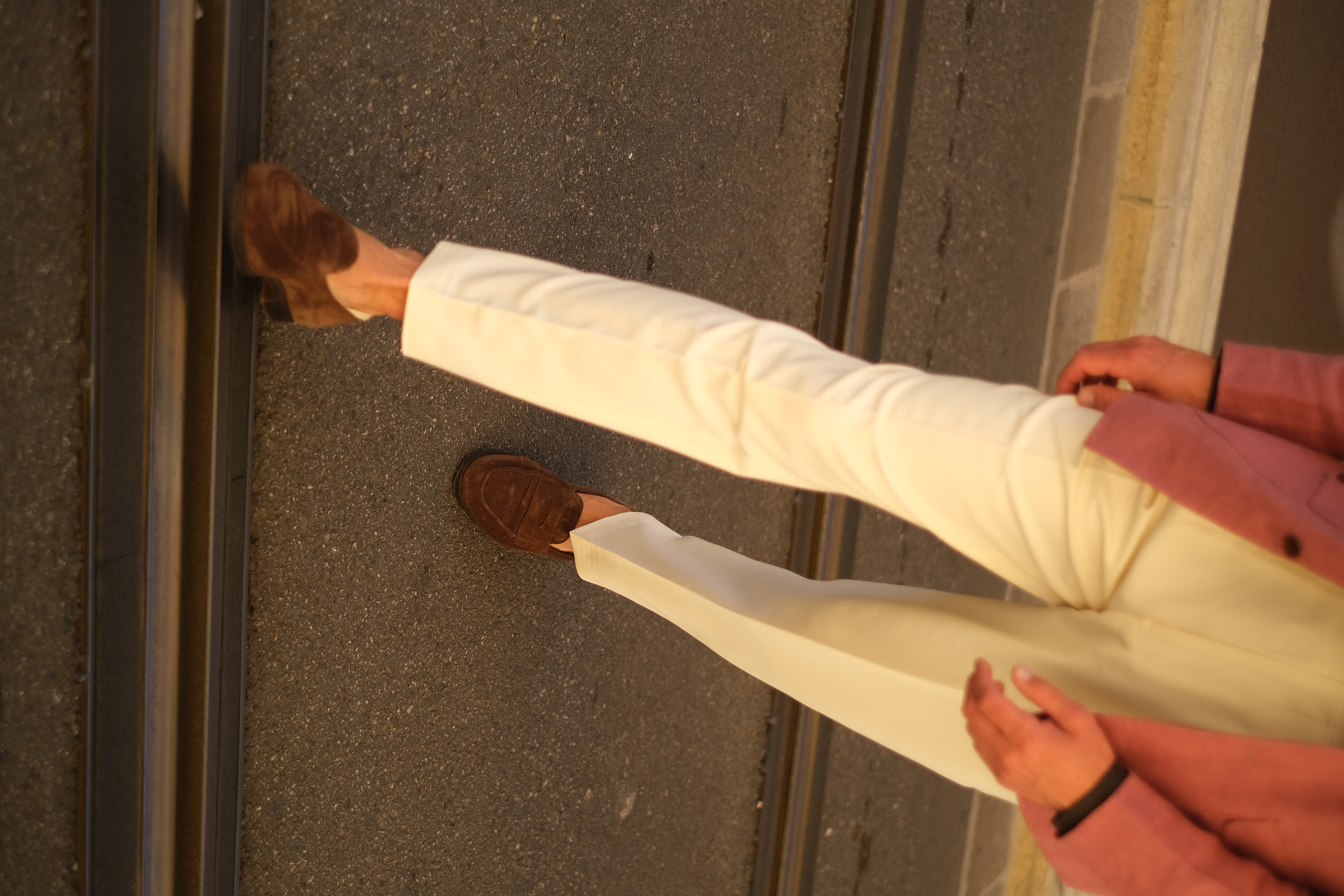
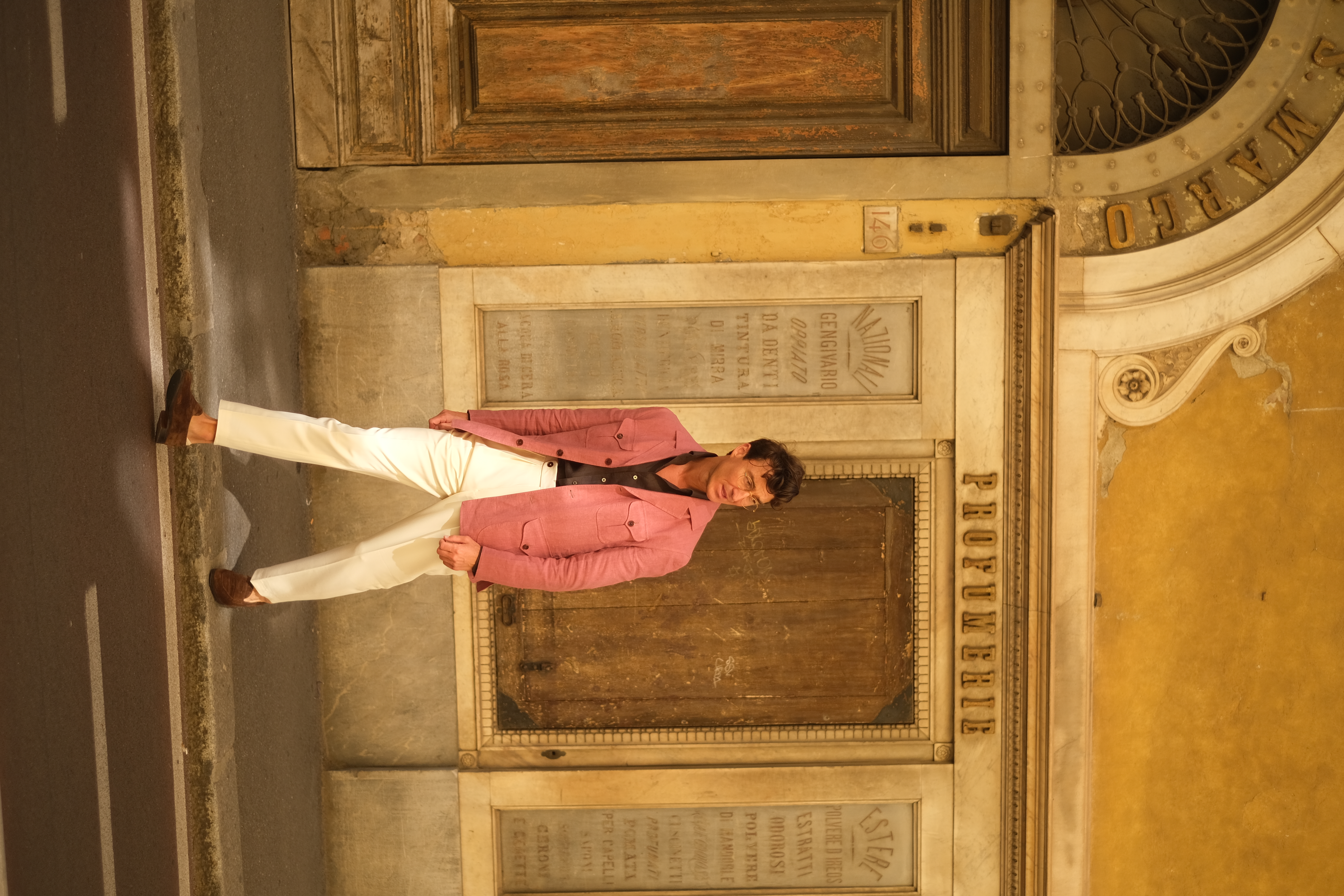
For the first day, we made ivory wool trousers — high-waisted, as always, with side adjusters at the waistband and double forward pleats. All our trousers are cut with internal pleats as standard. If you prefer the reverse, we can do that too — the garment follows the client, not the other way around.
This fabric has become one of my favourites for ivory trousers. It holds the colour cleanly, drapes well, and carries the weight of handwork without protest. There is a great deal of handwork in this piece — and it shows, for those who know where to look.
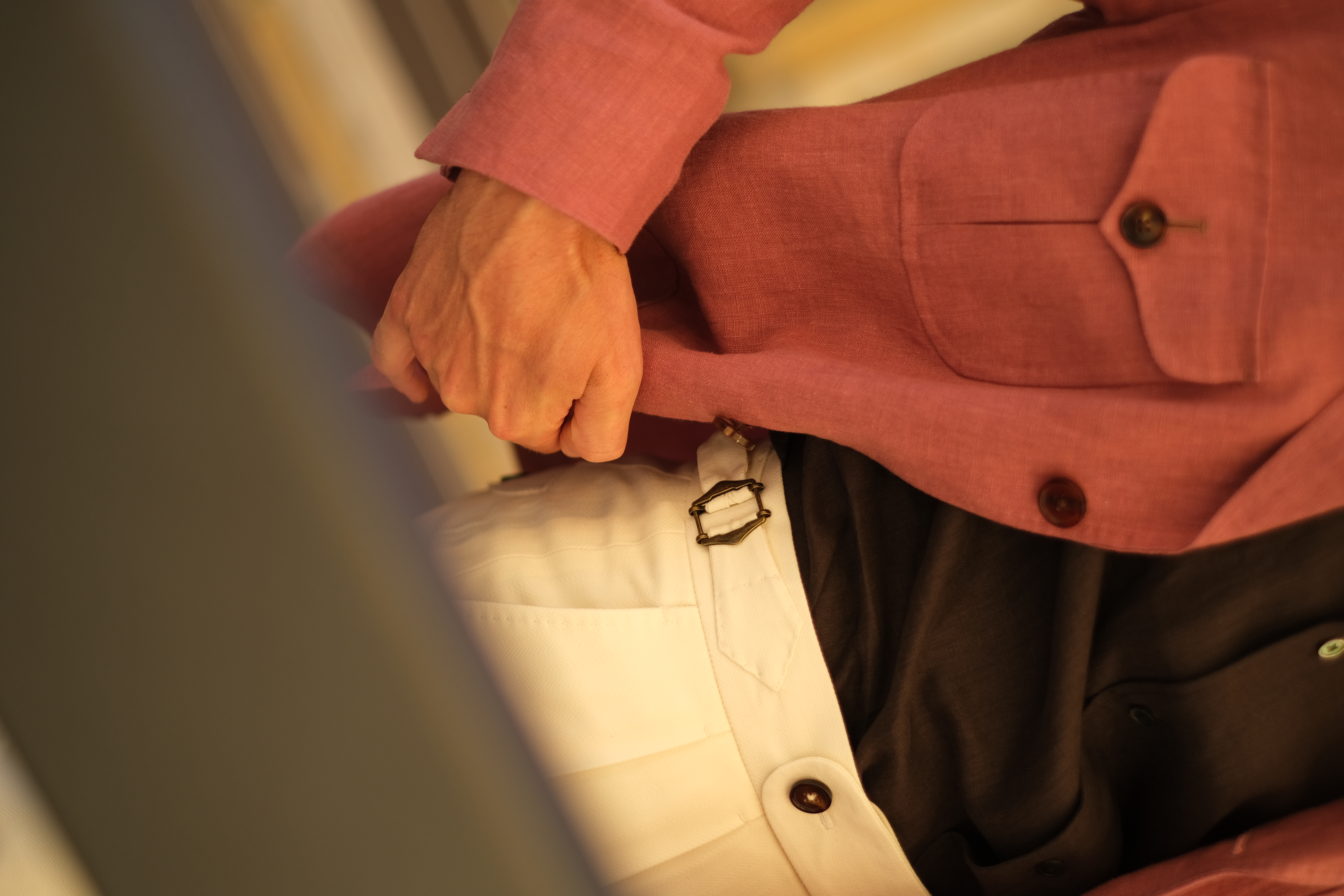
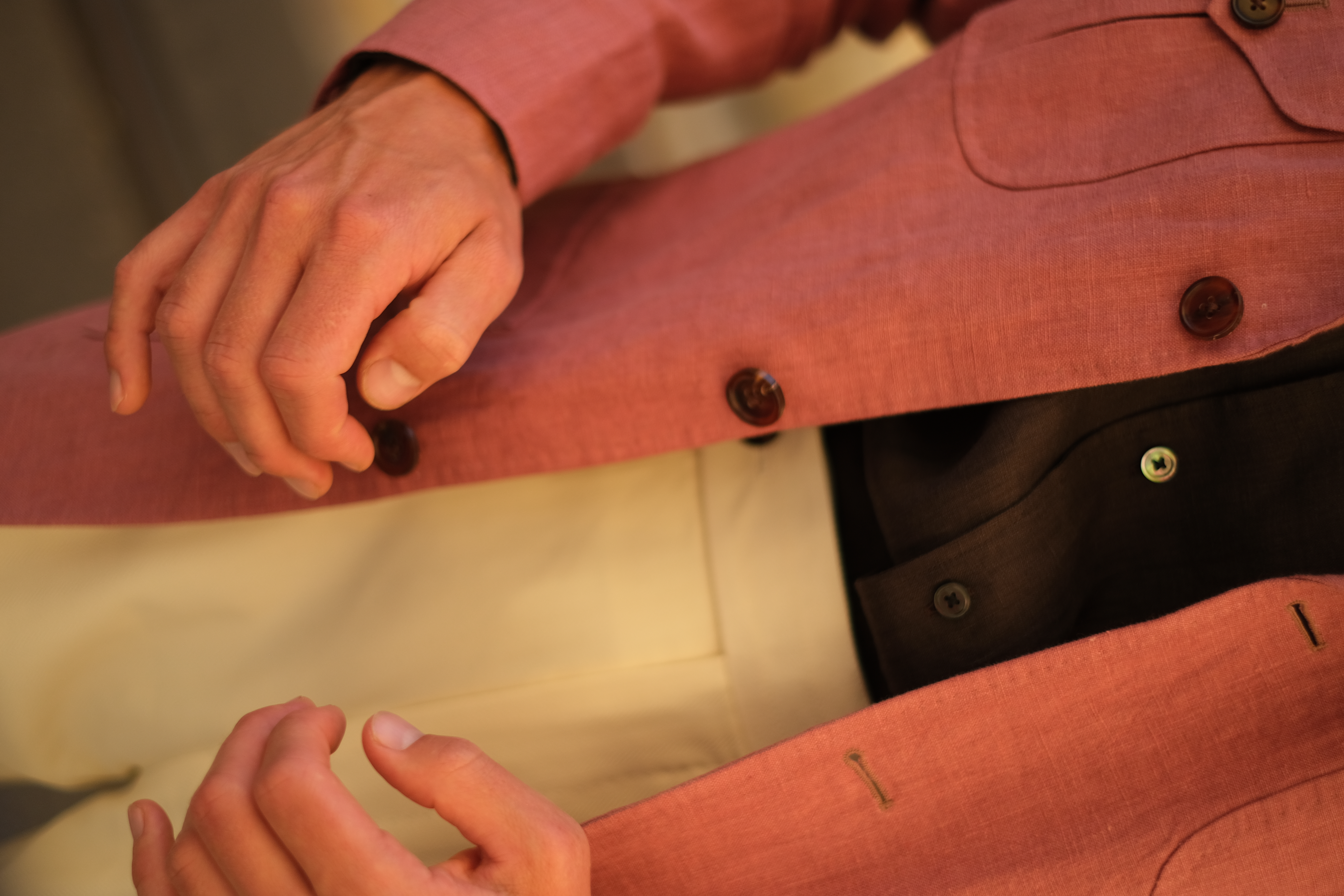
With the trousers: a brown linen shirt with a wide one-piece collar — a collar that changes the proportion of the whole look, shifting attention upward without asking for it. And the piece many of you have come to know — our raspberry linen safari jacket.
On my feet, penny loafers from John Lobb. They brought the right accent — not competing with what was above, but completing it.
"Details are the maker's signature. They reveal the level of experience, of eye, of care behind the work."
I have said this before, and I will keep saying it: details are what separate a garment from a good garment. I am always looking for balance — between the look as a whole and the details within it. Too much, and the garment speaks over the person. Too little, and it says nothing at all.
What mattered to me most in this look was the relationship between colour and texture — how the ivory, the brown, and the raspberry speak to each other, support each other, rather than compete. I wore it with genuine pleasure. I am glad it came through in the photographs, and glad that many of you felt the same.
Day Two: The Linen Suit
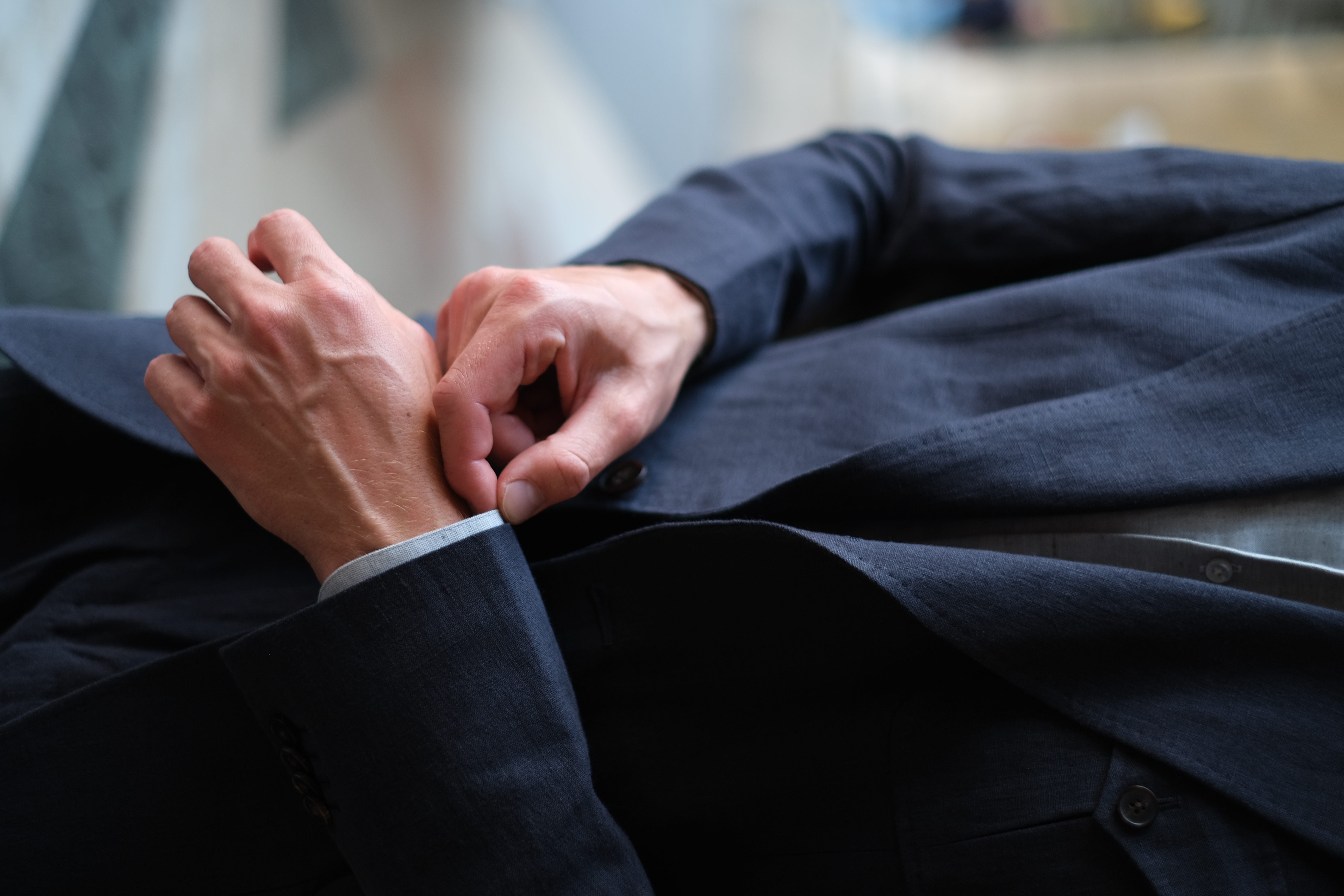
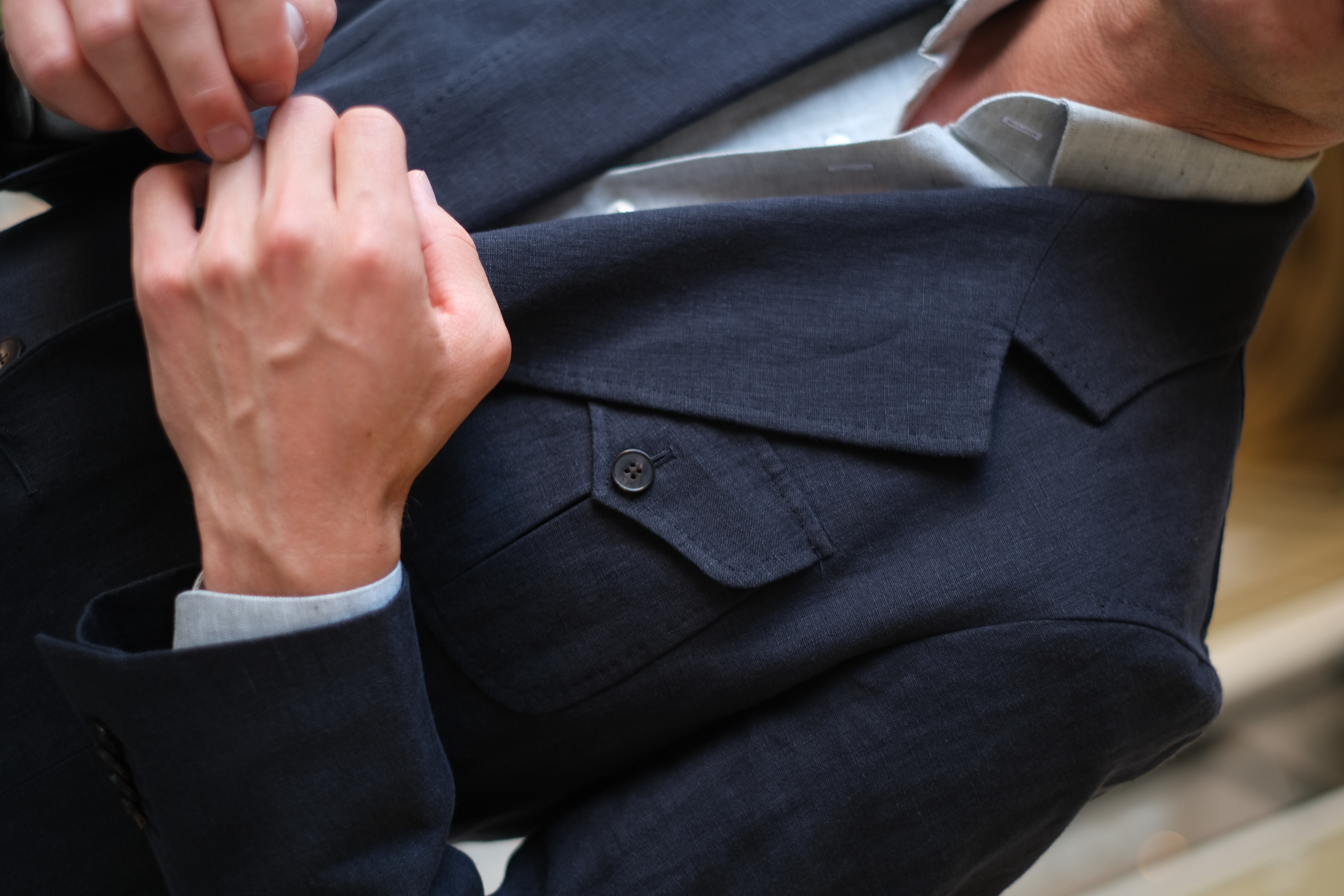
The second look was a linen suit — jacket with back darts and patch pockets, trousers cut to our standard: double forward pleats, side adjusters, high rise. The jacket closes on two-and-a-half buttons — what is sometimes called a false button, or a step lapel. It is a detail that reads as quiet from a distance and precise up close.
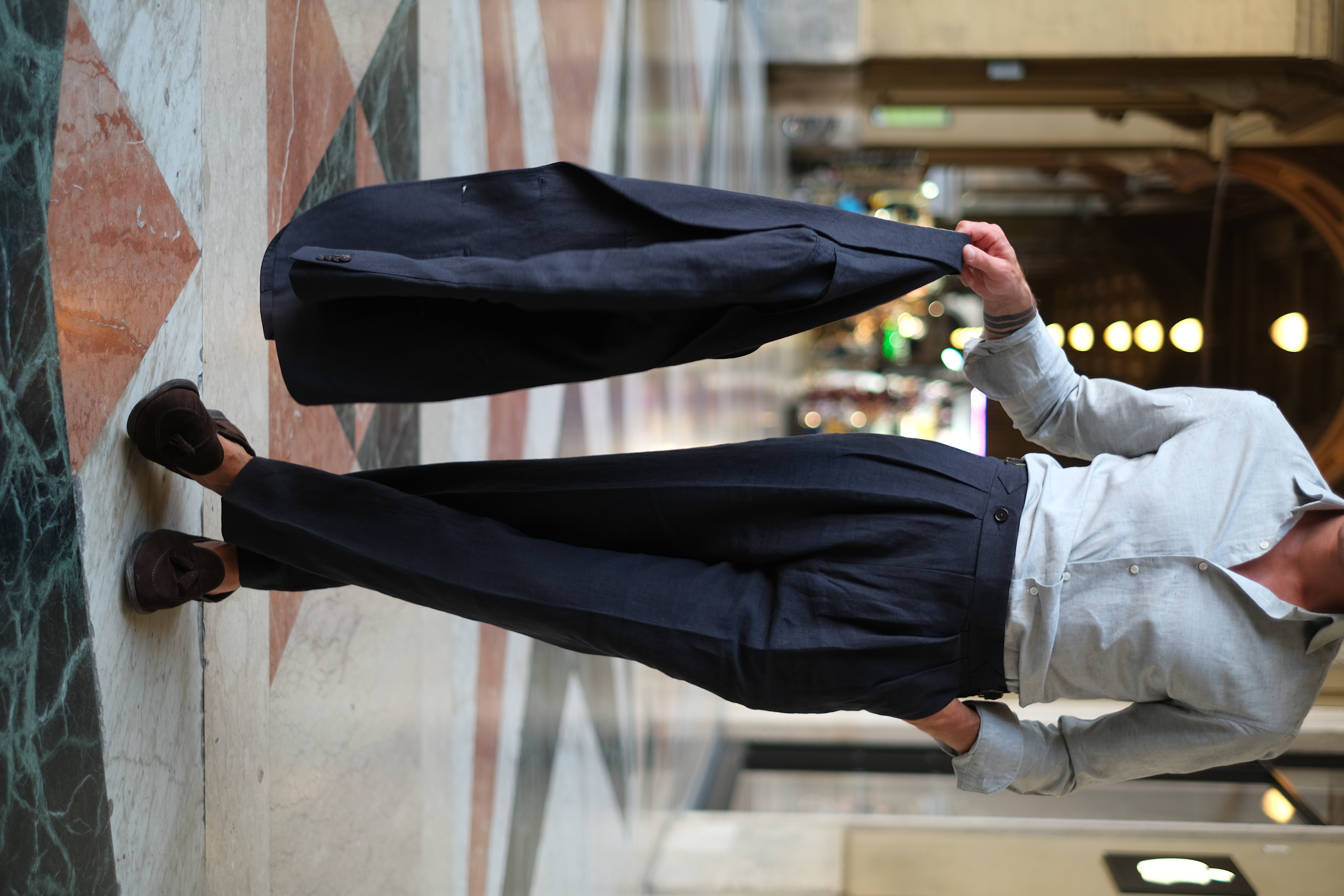
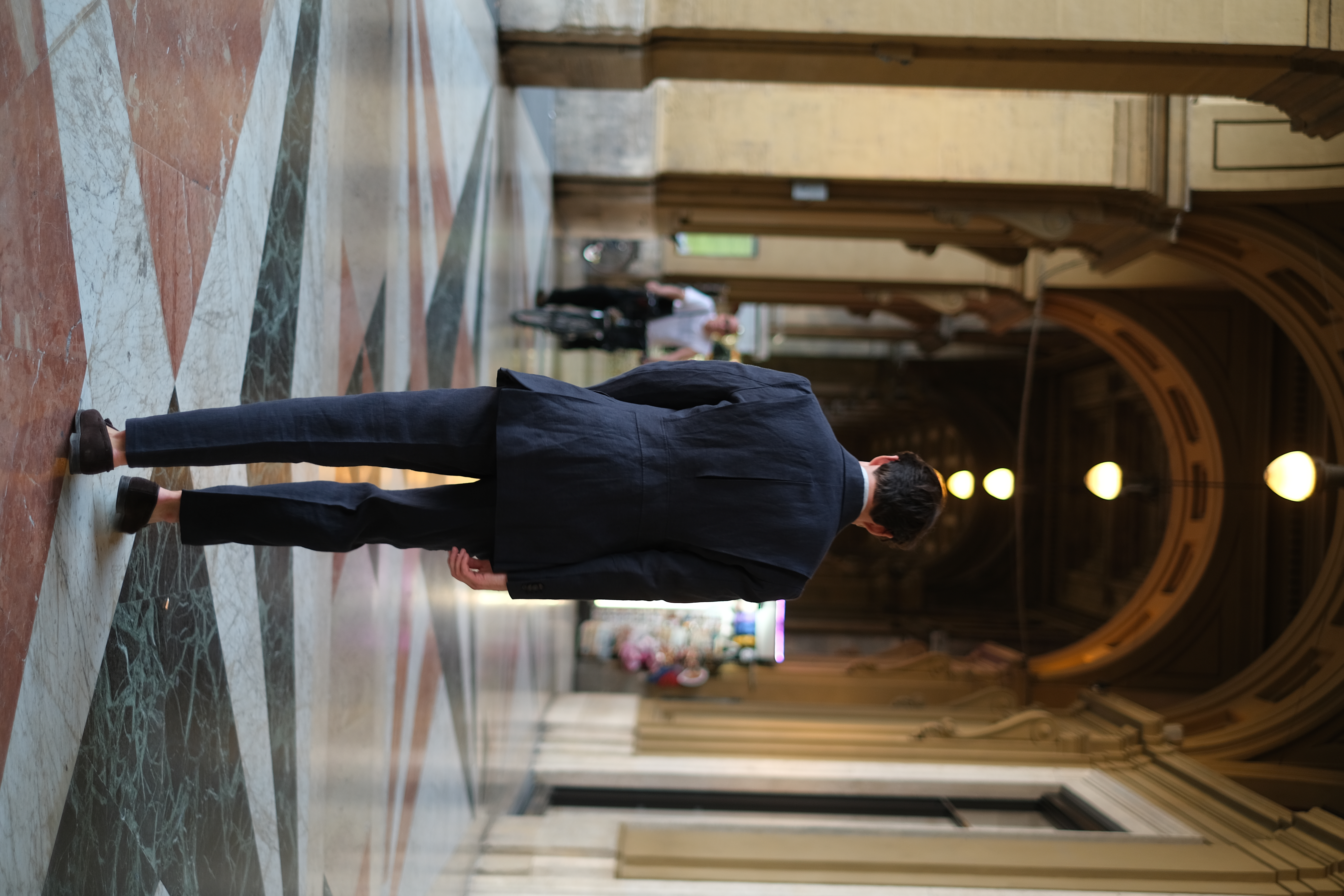
The goal for this piece was clear from the start: a wardrobe unit that we would reach for in daily life and wear with satisfaction. Not a piece for events. A piece for living — that happens to be made well enough to hold its own at Pitti Uomo.
We are pleased with the result. Wearing it felt easy — which is exactly what we were after.
Until Next Time, Florence
I am glad it all came together. This Pitti Uomo — like every edition before it — was productive, full of energy, and genuinely unforgettable. It was a pleasure to see each of you there.
To Florence, and to all our friends: until next time.
— Anton Masko
Something made
around you.
A first consultation takes 30 minutes. We talk about how you live, what you need, and what you want a garment to say about you.
Book a Consultation